
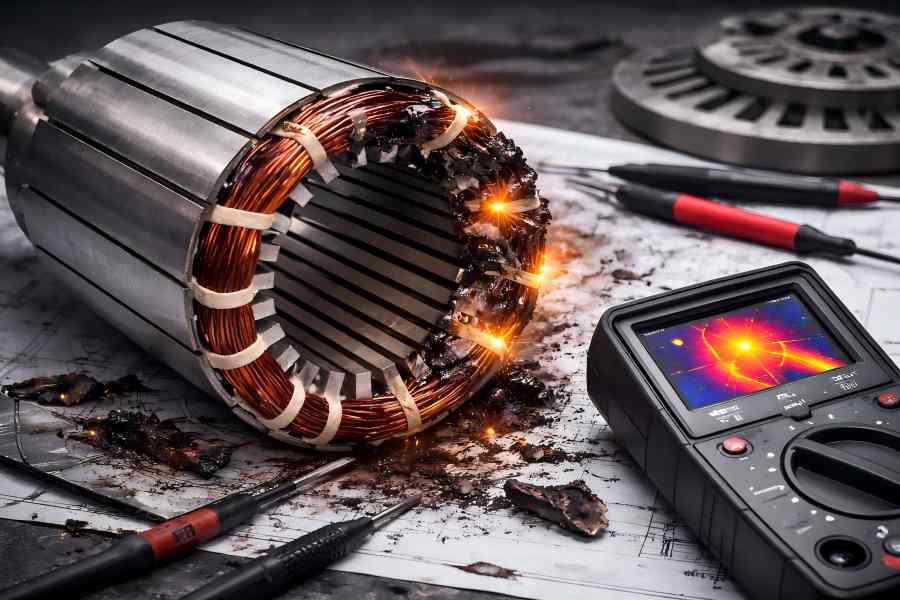
Electric motors are a key element in many industrial applications, spanning from production facilities to everyday household devices. A motor’s stator core lamination plays a crucial role in ensuring efficient performance by guiding magnetic flux while minimizing energy losses.
However, when a stator core lamination develops a short circuit, it can significantly impact the motor’s performance, leading to efficiency losses, increased wear, and potential failure.
Understanding Stator Core Laminations
The stator core is made up of thin, insulated sheets of magnetic steel placed one on top of the other. The primary function of these laminations is to reduce the energy losses caused by eddy currents, which occur when a magnetic field is applied to a conductor. By using thin laminations, the eddy currents are confined to a smaller area, thus minimizing energy waste.
Electrical steel is typically used to make stator laminations because of its low electrical conductivity and high magnetic permeability. This material lowers motor losses and guarantees effective energy transfer.
To stop eddy currents from passing between the laminations, they are electrically isolated from one another. Additionally, this insulating substance, which is usually varnish or other coatings, shields the laminations from electrical short circuits.
What Is a Short Circuit in Stator Core Laminations?
A short circuit in stator core laminations occurs when the insulation between the laminated sheets fails or becomes compromised. This allows the electrical current to bypass its intended path, often flowing through an unintended short path between laminations. Short circuits can result from several factors, including:
- Manufacturing Defects: Imperfect insulation or poor lamination bonding during the motor’s production.
- Wear and Tear: Over time, heat, vibration, or mechanical stress can weaken the insulation, causing it to degrade.
- Moisture Infiltration: Humidity or water exposure can compromise the insulation, allowing current to flow between laminations.
- Overheating: Excessive temperature can soften the insulating material or cause it to break down, leading to a short circuit.
The result of a short circuit is the loss of the stator’s magnetic field efficiency, which can severely affect motor performance.
Symptoms of a Short Circuit in Stator Core Laminations
When a short circuit develops in stator core laminations, it is usually accompanied by several noticeable symptoms that indicate the motor’s health is compromised:
- Decreased Motor Efficiency: A short circuit causes the motor to consume more power while producing less torque. This inefficiency increases the motor’s operating costs and reduces overall performance.
- Overheating: One of the most immediate effects of a short circuit is the generation of excess heat. The electrical current bypassing its proper path generates additional heat, leading to higher temperatures in the stator core and surrounding components.
- Unusual Noise or Vibration: Motors affected by short circuits in the stator laminations may produce humming or buzzing noises. This occurs because the magnetic field becomes distorted, causing the motor’s rotor to experience uneven forces.
- Visual Inspection Signs: If a short circuit is severe, the insulation between laminations may visibly break down. The motor’s casing may show warping or discoloration as a result of overheating.
These symptoms should be regarded carefully since they point to the need for urgent maintenance or inspection.
Consequences of a Short Circuit in Stator Laminations
The impact of a short circuit in the stator core laminations extends beyond just decreased efficiency. Here are the key consequences:
- Increased Heat Generation and Thermal Stress: As the short circuit causes energy to dissipate in the form of heat, the stator core experiences elevated temperatures. Prolonged exposure to high temperatures can lead to thermal stress, which may warp or even melt critical components of the motor.
- Risk of Insulation Breakdown: The excess heat generated by a short circuit can further degrade the insulation material surrounding the stator windings, leading to a cascading failure that can damage the entire winding assembly.
- Motor Failure: If left unchecked, a short circuit can result in total motor failure. The rotor may lose its ability to rotate, or the motor may trip due to thermal protection mechanisms. Even if the motor doesn’t immediately fail, the shortened lifespan will necessitate costly repairs or replacements.
- Energy Losses: A short circuit reduces the motor’s ability to operate efficiently. As energy is lost through excess heat, the motor consumes more power, which increases operational costs.
The long-term damage caused by a short circuit can render the motor unusable or significantly shorten its lifespan.
How a Short Circuit Affects the Motor’s Performance
When a stator core lamination short-circuits, the motor’s overall performance is significantly affected:
- Impact on Torque and Speed Regulation: The short circuit reduces the motor’s torque output, making it harder for the motor to perform tasks at optimal speeds. It may struggle under load and have difficulty maintaining consistent rotational speeds.
- Increased Power Consumption and Operating Costs: Due to the inefficiencies introduced by the short circuit, the motor requires more electrical energy to perform the same tasks. For industrial processes, this increased energy demand results in higher utility prices.
- Reduced Reliability: A motor affected by short circuits is less reliable and may frequently experience downtimes. The motor may also experience erratic behavior or fail to start or stop properly.
Short circuits compromise the motor’s ability to function as intended, leading to higher costs and reduced productivity.
Detection and Diagnosis of Short Circuits in Stator Laminations
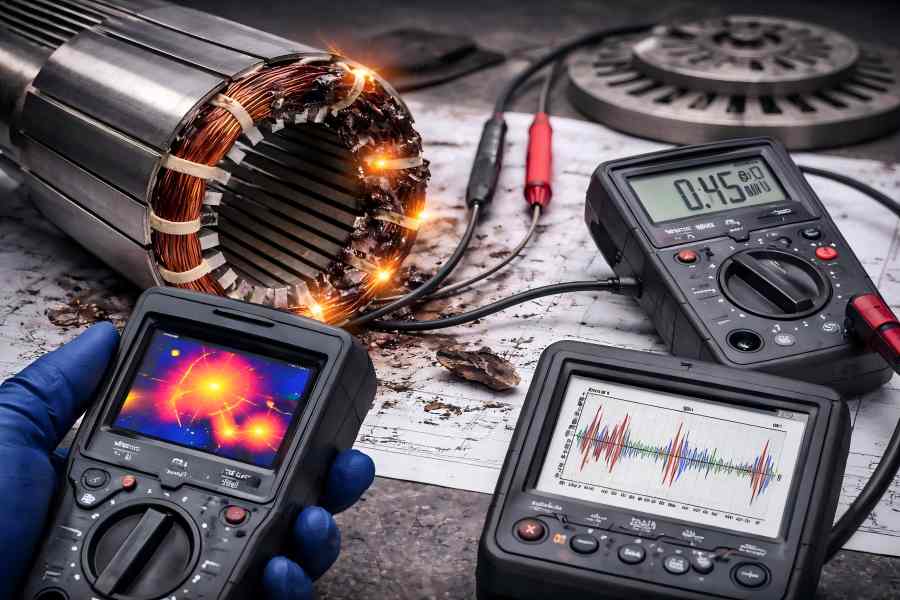
Detecting a short circuit in the stator core lamination is crucial to prevent further damage. Various diagnostic techniques can assist in detecting a short circuit:
Visual Inspection
Using infrared thermography, technicians can identify areas of the motor that are overheating, which may indicate the presence of a short circuit. Additionally, physical signs such as discolored or charred laminations can point to insulation failure.
Electrical Testing
- Insulation Resistance Testing: This test checks for the integrity of the stator core’s insulation. A short circuit could be indicated by a low resistance value.
- Impedance Measurement: This method measures the impedance of the stator windings. A decrease in impedance can suggest an electrical fault within the laminations.
Vibration Analysis
Using vibration monitoring tools, technicians can detect unusual vibrations caused by magnetic field distortions, which are a sign of damage to the stator core laminations.
By employing these diagnostic techniques, maintenance teams can detect a short circuit before it leads to catastrophic motor failure.
Prevention of Short Circuits in Stator Core Laminations
Preventing short circuits in stator laminations is critical to ensuring motor longevity and efficiency. The following practices can help reduce the risk of a short circuit:
- Quality Control During Manufacturing: Ensuring that laminations are properly insulated and bonded during production is essential. Advanced manufacturing processes, such as using high-quality insulation materials, can prevent insulation failure.
- Regular Maintenance and Inspections: Periodic inspections using the diagnostic methods discussed above can help detect early signs of wear and prevent damage from developing into a short circuit.
- Proper Storage and Handling: Ensuring that stator laminations are stored in dry, temperature-controlled environments helps prevent moisture damage to the insulation.
- Environmental Controls: Installing temperature and humidity controls in the motor’s operating environment helps prevent external factors, such as excessive heat or moisture, from compromising the insulation.
Implementing these preventive measures can significantly reduce the likelihood of a short circuit in stator core laminations.
Repairing and Replacing Damaged Laminations
If a short circuit is detected, it is important to assess the damage and decide whether repairs or replacement are necessary.
- Re-lamination: If the damage is localized, the affected laminations can be replaced or re-laminated with new insulation materials.
- Insulation Replacement: If the insulation has deteriorated, it could be essential to take it out and replace it with a fresh, better-quality insulation.
- Complete Stator Core Replacement: In cases of severe damage, such as widespread short circuits or thermal degradation, replacing the entire stator core may be the best option.
In order to prevent additional damage and guarantee that the motor keeps operating at peak performance, prompt repairs are crucial.
Case Studies
In industrial motor applications, short circuits in stator laminations have led to significant operational disruptions. One noteworthy instance concerned a manufacturing facility that frequently had motor failures as a result of short circuits brought on by subpar insulation. After performing regular diagnostics and replacing the damaged laminations, the plant saw a dramatic decrease in downtime and energy consumption, demonstrating the importance of early detection and proper maintenance.