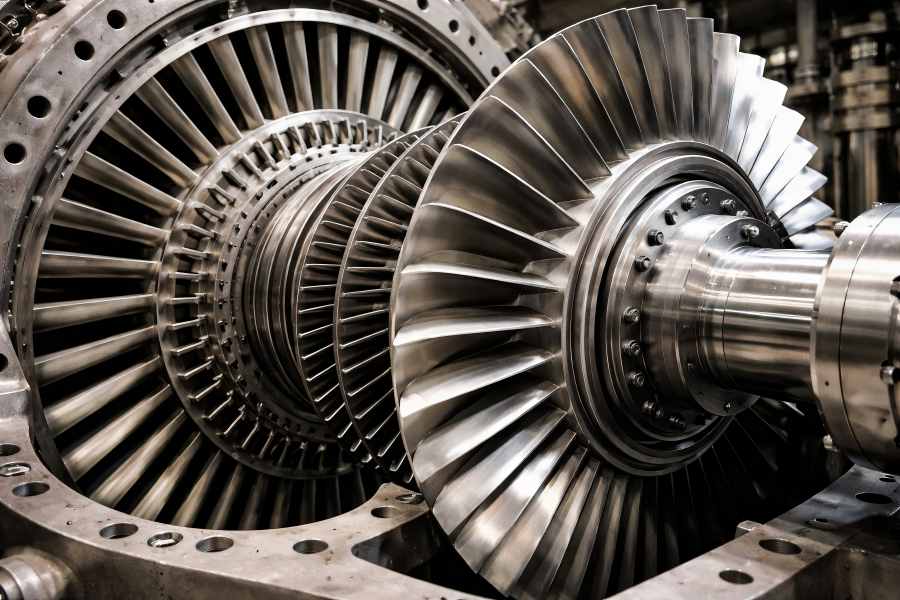
Turbines are utilized in ships, aircraft, and power plants to transform fluid energy into mechanical energy. The rotor and stator, the two primary parts, cooperate to guarantee effective operation. Both the stator and the rotor are essential to energy conversion; the stator stays stationary while the rotor revolves.
What are Turbines?
A turbine converts fluid energy (steam, gas, or water) into mechanical energy to generate electricity or power machinery. They are used in power plants and industrial machines. The key components of a turbine include:
- Rotor: The rotating component that captures the fluid’s energy through its blades or vanes as the fluid passes over it.
- Stator: The stationary component that channels the fluid flow onto the rotor and may also transform the fluid’s pressure into kinetic energy.
In turbine systems, the rotor and stator work together in a symbiotic relationship to optimize energy conversion. Both parts are essential for the turbine’s efficiency, but their roles and functions are distinct.
What Is the Rotor in a Turbine?
The moving component of a turbine that comes into direct contact with the fluid is called the rotor. It transforms the fluid’s kinetic energy—such as that of water, steam, or gas—into mechanical energy. In order to capture the fluid flow and transfer its energy, the rotor is made up of strategically positioned blades or vanes. The rotor’s main features are as follows:
Function of the Rotor
The main function of the rotor is to transform the kinetic energy of the fluid into mechanical energy. The rotor spins because of the force created by the fluid moving across the rotor blades.
A generator, pump, or other mechanical device is powered by this rotating motion. The turbine’s total performance is directly impacted by the rotor’s design efficiency.
Materials and Design Considerations
The rotor must withstand high mechanical stresses, temperature variations, and corrosive conditions. For example, in a gas turbine, the rotor is subjected to extreme temperatures, which requires the use of heat-resistant alloys like Inconel or titanium. Rotor blades are often coated with protective layers to increase their lifespan and improve efficiency.
Key Applications of the Rotor
- Steam Turbines: In steam turbines, the rotor is driven by steam that passes through the blades, making it a key component in power generation.
- Gas Turbines: In gas turbines, the rotor blades are designed to withstand high-pressure, high-temperature gas flow, converting the energy into mechanical power.
- Hydraulic Turbines: In hydroelectric power plants, the rotor is turned by the force of water, and its design is crucial to maximize the conversion of water’s potential energy into mechanical energy.
Rotor Efficiency
Rotor efficiency is determined by the shape and angle of the blades, as well as the material used. The performance of rotors has been greatly enhanced by developments in material science and aerodynamics, enabling turbines to run more effectively and at greater capacities.
What Is the Stator in a Turbine?
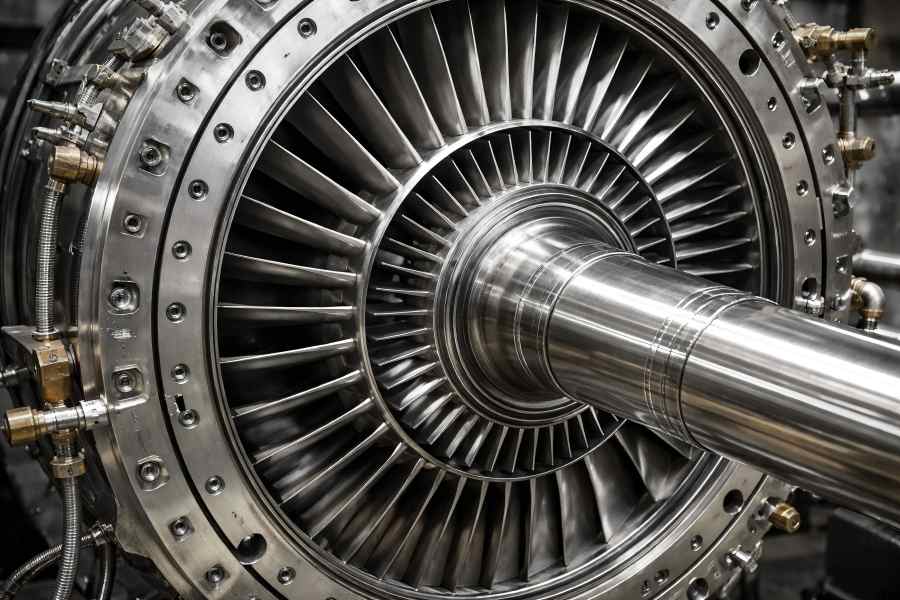
The stator is the rotor’s stationary equivalent. While the rotor captures the fluid’s energy, the stator plays a crucial role in directing the fluid onto the rotor in a controlled manner. It serves as a conduit for the fluid and is often designed to convert the pressure of the fluid into kinetic energy. Key aspects of the stator include:
Function of the Stator
The stator’s primary role is to direct the fluid flow toward the rotor in a way that maximizes energy conversion. In many turbines, the stator is responsible for converting the fluid’s pressure into velocity before the fluid hits the rotor. The stator blades or vanes are positioned around the rotor, guiding the fluid and ensuring it enters the rotor at the correct angle and speed.
Materials and Design Considerations
The stator is typically made from materials that can handle high pressures and resist corrosion, such as stainless steel or advanced alloys. It may also include coatings or surface treatments to improve its resistance to erosion caused by high-velocity fluids. In some turbines, the stator is designed to be adjustable, allowing for optimization of fluid flow under different operating conditions.
Key Applications of the Stator
Steam Turbines: In steam turbines, the stator helps guide steam toward the rotor blades, optimizing the energy transfer from steam to mechanical power.
Gas Turbines: In gas turbines, the stator blades are crucial for channeling the hot gases into the rotor in a way that maximizes energy conversion.
Wind Turbines: While wind turbines typically rely on wind power rotors to harness the energy of the wind, some designs incorporate stator-like structures to optimize airflow and improve energy efficiency.
Stator Efficiency
Stator efficiency is influenced by factors such as blade shape, material selection, and the precise alignment of the stator components. Modern stator designs often incorporate adjustable blades that can optimize fluid flow in response to changing operating conditions, further enhancing turbine efficiency.
Important Distinctions Between the Rotor and Stator
The rotor and stator are two distinct components of a turbine, each playing a crucial role in the machine’s operation. Their primary differences lie in their movement, function, and placement within the turbine.
Role and Functionality:
The rotor is the energy-absorbing and energy-producing part of the turbine.It transforms the fluid’s energy into rotational motion by direct interaction. The stator, on the other hand, serves as a guide, directing the fluid towards the rotor and controlling its flow to optimize the energy extraction process.
Physical Location:
The rotor is typically located at the center of the turbine, connected to a shaft that transmits its rotational energy. The stator is located around the rotor and remains stationary throughout the turbine’s operation. The stator’s position allows it to channel the incoming fluid into the rotor efficiently.
Movement:
One of the most significant differences between the rotor and stator is their movement. The rotor is designed to rotate rapidly, driven by the energy transferred from the fluid. In contrast, the stator remains stationary and works passively to direct and manage the fluid flow.
Energy Conversion:
The rotor plays an active role in converting the fluid’s energy into mechanical energy, while the stator does not contribute directly to energy conversion. Instead, the stator’s role is to prepare the fluid in a way that ensures the rotor can extract the maximum amount of energy possible.
| Feature | Rotor | Stator |
| Movement | Rotates, driven by fluid energy | Stationary, does not rotate |
| Function | Converts fluid energy into mechanical energy | Guides and directs fluid flow to the rotor |
| Energy Role | Directly involved in energy conversion | Passively directs fluid for energy efficiency |
| Material | High-strength alloys, nickel-based superalloys | Stainless steel, corrosion-resistant materials |
How the Rotor and Stator Work Together
The rotor and stator are not independent components but work together to achieve optimal turbine performance. As fluid flows through the stator, its pressure is converted into velocity, which is then directed toward the rotor. The fluid’s energy is captured by the rotor, which spins and produces mechanical energy. This interaction between the rotor and stator allows for efficient energy conversion and is a critical factor in the turbine’s overall efficiency.
For instance, in a steam turbine, high-pressure steam enters the stator, where it is directed toward the rotor blades. A generator or other mechanical equipment is turned by the mechanical energy produced as the rotor rotates while the steam flows over the blades. The stator and rotor must be precisely aligned to ensure that the fluid enters the rotor at the correct angle and velocity, optimizing energy conversion.