
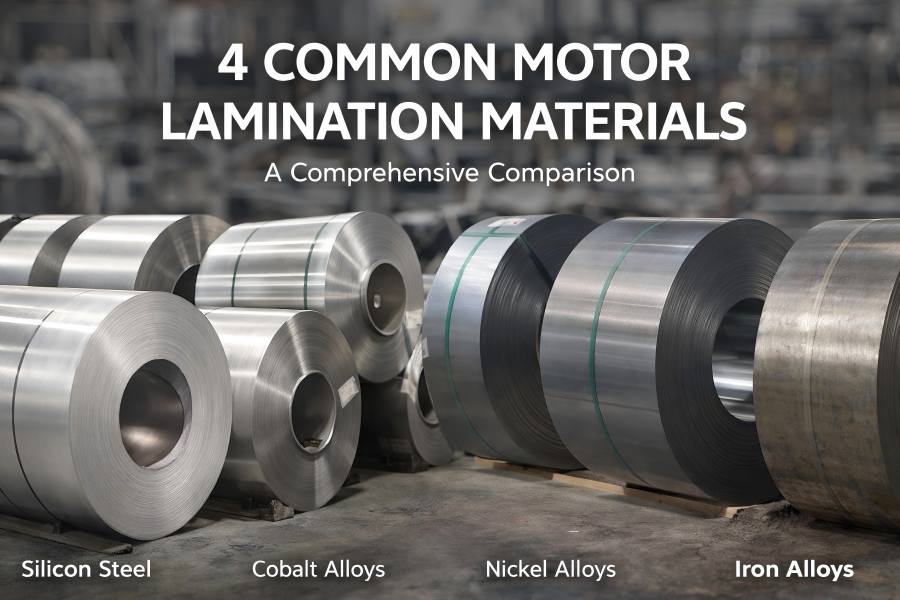
Powering applications from electric vehicles and industrial robots to home appliances and renewable energy systems, electric motors rely heavily on lamination material selection.
While designers focus on windings and control strategies, lamination materials fundamentally determine magnetic performance, iron loss, efficiency, noise, heat dissipation, and overall cost and reliability.
A Quick Comparison
| Material | Magnetic Permeability | Saturation Flux Density (T) | Core Loss | Frequency Capability | Thermal Stability | Cost Level | Typical Applications |
| Silicon Steel | High | ~1.5–2.0 | Low–Medium | Medium–High | Good | Medium | Industrial, EV, general motors |
| Cobalt Alloys | Very High | ~2.0–2.4+ | Very Low | High | Excellent | Very High | Aerospace, high-speed, premium motors |
| Nickel Alloys | Very High | ~0.8–1.6 | Low | Low–Medium | Very Good | High | Precision motors, sensors |
| Iron Alloys | Medium | ~1.8–2.2 | High | Low | Moderate | Low | Low-speed, legacy motors |
Silicon Steel
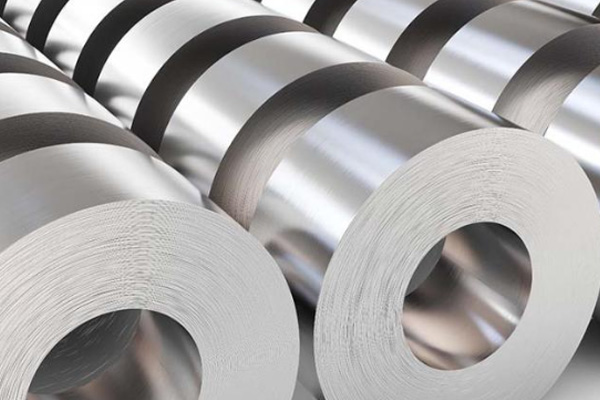
The most common material for motor lamination is silicon steel, often known as electrical steel. Alloying iron with 1–3.5% silicon improves electrical resistance and magnetic performance, effectively reducing eddy current losses and core loss.
The material is offered in non-oriented (NO) and grain-oriented (GO) forms. Non-oriented silicon steel is primarily used in motors because it provides uniform magnetic properties in all directions, ideal for rotating magnetic fields.
| Pros | Cons |
| Excellent cost-performance balance | Not the highest magnetic performance |
| Low core loss at typical speeds | Less suitable for extreme temperatures |
| Widely available and easy to process | Loss increases with frequency |
| Good mechanical properties | May require thicker stacks at low frequencies |
Applications
- Industrial induction motors
- Electric vehicle traction and auxiliary motors
- Consumer appliances (washers, fans, compressors)
- HVAC and pump motors
- Power generation alternators
Cobalt Alloys
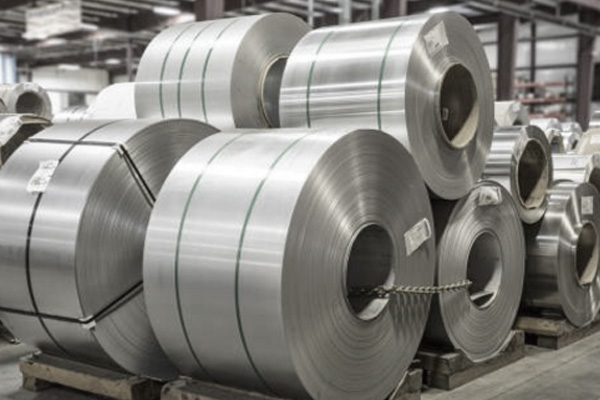
Cobalt alloys, particularly iron-cobalt (CoFe) alloys, are high-performance lamination materials offering very high magnetic saturation, permeability, and thermal stability, enabling higher power density and efficiency.
Although much more expensive than silicon steel due to material and processing costs, cobalt alloys are justified in applications where size, weight, and performance are critical.
| Pros | Cons |
| Very high magnetic saturation | Very high material cost |
| Excellent performance at elevated temperatures | Limited global supply |
| Reduced core loss at high frequencies | Difficult to process/stamp |
| Enables compact, lightweight motors | Requires specialized tooling |
Applications
- Aerospace and defense motors
- High-speed spindles
- High-frequency machines
- Ultra-compact, high-power density EV motors
- Specialized industrial drives
Nickel Alloys
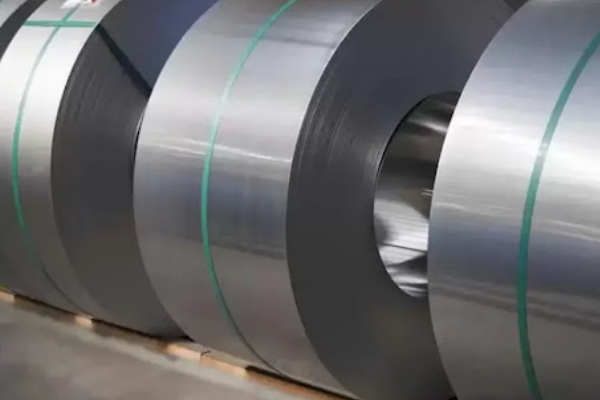
Nickel alloys, especially iron-nickel types like Permalloy, provide very high magnetic permeability and low coercivity. Although their saturation flux is lower than cobalt alloys, they are well-suited for applications requiring high sensitivity, low hysteresis loss, and stable magnetic performance.
They are therefore commonly used in precision motors, sensors, and instrumentation where consistent, low-noise performance is essential.
| Pros | Cons |
| Extremely high permeability | Reduced saturation flux density |
| Minimal loss of hysteresis | More expensive than silicon steel |
| Stable, repeatable performance | Less suited for high-power motors |
| Excellent for precision systems | May require specialized fabrication |
Applications
- Precision servomotors
- Actuators and control systems
- Magnetic sensors
- Aerospace instrumentation
- Medical and scientific devices
Iron Alloys
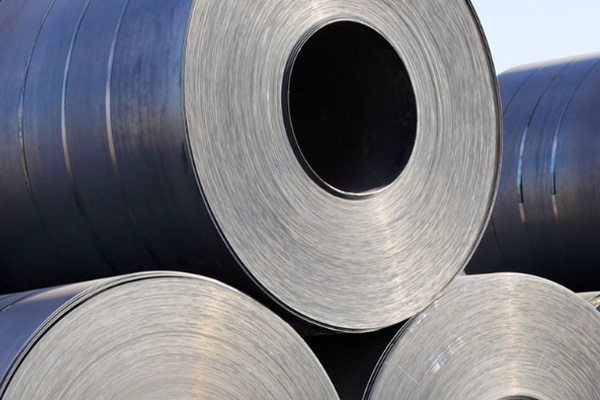
Iron alloys, mainly near-pure or low-carbon iron, are among the earliest motor lamination materials. They provide high saturation flux density at low cost but have high eddy current losses due to low electrical resistivity, restricting their use to cost-sensitive or legacy applications.
While largely replaced by silicon steel in modern high-efficiency motors, iron alloys are still used where simplicity and cost minimization are priorities.
| Pros | Cons |
| High saturation flux density | High eddy current losses |
| Low raw material cost | Poor high-frequency performance |
| Strong mechanical properties | Lower efficiency motors |
| Simple supply chain | Largely replaced in modern designs |
Applications
- Low-speed industrial motors
- Legacy and repair market motors
- Some large synchronous machines
- Economic, low-efficiency applications
Making the Right Material Choice
Selecting the right motor lamination material requires aligning application requirements with performance and production constraints.
Efficiency vs Cost
If the priority is reducing core loss and improving efficiency at scale, especially in EVs or industrial drives, silicon steel is often the most balanced choice. Its mature supply chain and processing compatibility make it the backbone of modern motor manufacturing.
High Performance Premium
For motors where weight, operating temperature range, and power density matter more than cost, such as aerospace or high speed premium motors, cobalt alloys deliver unmatched magnetic performance.
Precision and Control
Motors used in precision instrumentation or aerospace control systems benefit from the stability and low hysteresis loss of nickel alloys, even though their saturation flux is lower.
Legacy and Low Budget
In applications where budget or simplicity outweighs performance, such as large slow industrial motors or legacy repair markets, iron alloys remain a practical and cost effective choice.