
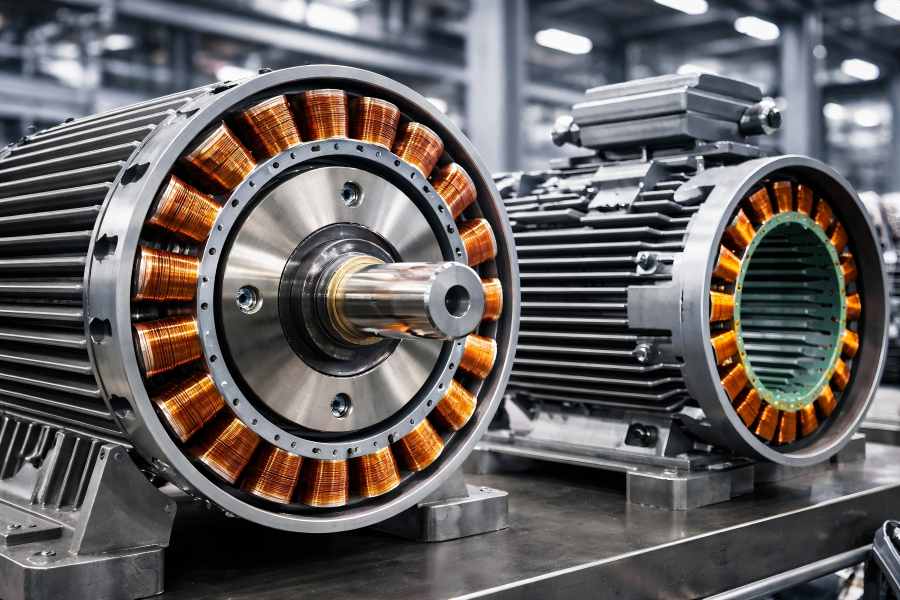
Flywheels are crucial components in energy storage systems, acting as mechanical batteries to store and release energy in industrial applications. The rotor and stator components’ designs have a significant impact on these systems’ efficiency. Flywheels, which are often used in applications such as power grid stabilization, backup power supplies, and renewable energy integration, require robust rotor and stator designs to ensure efficient energy storage and conversion.
What Are the Fundamentals of Flywheel Systems?
A flywheel is a mechanical device that rotates and stores energy as kinetic energy. It works on the principle of angular momentum, where energy is stored when the flywheel spins and can be released when required, typically through a generator or motor. Flywheels are integral in many industrial applications where energy needs to be stored and released on demand, such as in combined heat and power (CHP) systems, backup power for data centers, and stabilizing the output of renewable energy sources like wind or solar.
The basic structure of a flywheel consists of two main components: the rotor, which stores energy through its rotational motion, and the stator, which converts mechanical energy into electrical energy through electromagnetic induction. The performance of a flywheel system, especially in terms of power generation, is significantly influenced by the design of these two components.
Flywheel Rotor Design
Rotor Function and Role
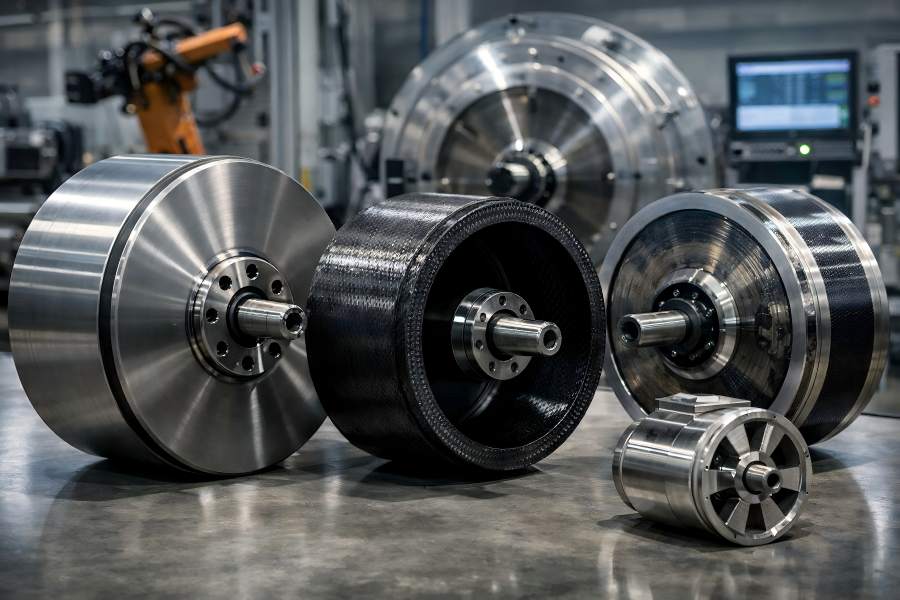
A flywheel rotor is the part that stores its kinetic energy. As the rotor spins, energy is stored in the system, which can later be converted to electrical power or used to stabilize energy flows. A key aspect of the rotor’s design is its ability to maintain a high rotational speed without failure. This requires the rotor to have specific design features that contribute to its mechanical stability, safety, and efficiency in storing energy.
Common Rotor Design Types
Several types of rotor designs are commonly used in flywheel systems, each offering distinct advantages and drawbacks:
- Solid Rotors: Made from high-strength steel or other durable metals, solid rotors offer robust performance. They are straightforward in design and easy to manufacture, but they are heavier and require significant material to achieve the necessary moment of inertia.
- Hollow Rotors: Featuring a hollow center, these rotors are commonly constructed from composite materials like carbon fiber. They are lighter than solid rotors, which allows for higher speeds and better energy storage efficiency. However, they often require more advanced manufacturing processes and materials.
- Composite Rotors: With the rise of advanced materials, composite rotors, especially those made of carbon fiber or fiberglass, have gained popularity. High strength-to-weight ratios provided by these materials enable rotors that are lighter, quicker, and more effective.
| Rotor Material | Strength-to-Weight Ratio | Energy Density (J/kg) | Common Applications |
| Steel | Moderate | 30-50 | Grid Stabilization |
| Carbon Fiber | High | 150-250 | High-Speed Systems |
| Aluminum Alloy | Low | 15-20 | Small-Scale Systems |
Design Parameters Impacting Power Generation
The performance of a flywheel system is influenced by various rotor design parameters:
- Mass Distribution and Moment of Inertia: A flywheel’s ability to store energy depends on its moment of inertia, which is affected by the mass distribution. A rotor with more mass on the outer edges of the flywheel has a higher moment of inertia, thus storing more energy at a given rotational speed.
- Material Selection and Energy Density: Materials like carbon fiber, while expensive, offer high energy density and efficiency due to their lightweight and high-strength properties. Steel and other metals, though cost-effective, provide lower energy density.
- Operating Speed Constraints: The rotor must be designed to operate at very high speeds, often exceeding 10,000 RPM in high-performance applications. The design must ensure that the rotor can withstand the forces generated at these speeds without failure.
Rotor Design Trends in Industrial Power Systems
Recent trends in rotor design focus on:
- Lightweight High-Strength Materials: The shift towards advanced composites like carbon fiber and graphene allows for lighter, stronger, and more efficient flywheels, leading to better overall performance and higher efficiency.
- Advanced Manufacturing Techniques: By enabling more intricate rotor designs and quicker production periods, techniques like precision forging and additive manufacturing (3D printing) lower system costs overall.
- Safety Improvements: Given the high speeds involved, many modern flywheels incorporate safety features such as containment structures designed to prevent damage in the event of rotor failure.
Stator Design and Its Role in Power Conversion
Stator Function in Flywheel Systems
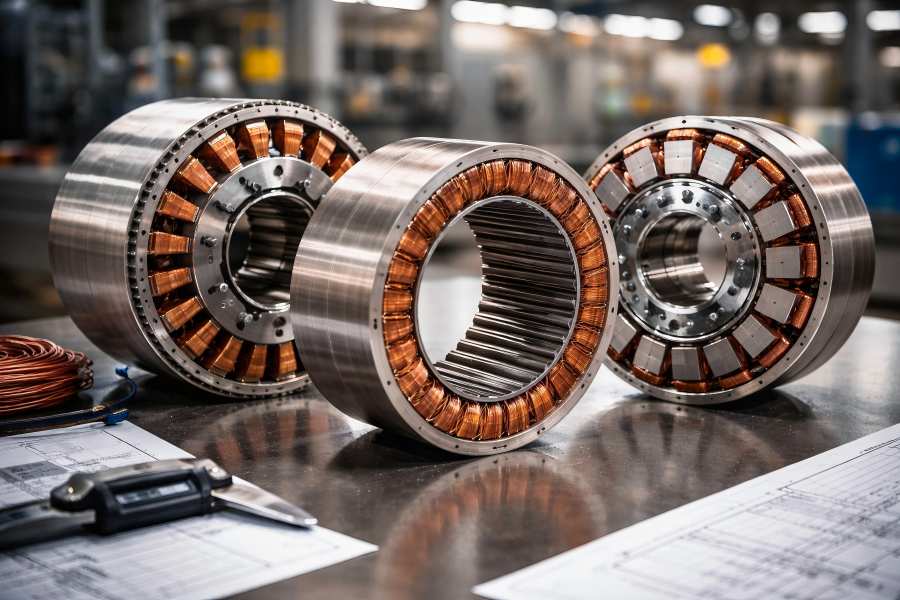
The stator’s primary role is to convert the mechanical energy from the rotor into electrical energy. This is accomplished using electromagnetic induction, in which the rotor’s spinning creates a magnetic field that causes the stator windings to conduct electricity. The effectiveness and efficiency of energy conversion are largely dependent on the design of the stator.
Stator Construction Types
Stators come in various designs based on the needs of the flywheel system:
- Wound Stators: These are classic stators composed of a core encircled by copper windings. They are reliable but may not be as efficient in high-performance applications due to the electrical losses associated with copper.
- Slotless Stators: These stators eliminate the traditional slots that house windings, providing reduced cogging (a phenomenon that causes uneven rotation). This is ideal for high-speed flywheel applications.
- Coreless and Permanent Magnet Stators: Some advanced designs integrate permanent magnets into the stator, eliminating the need for an electrical current to create the magnetic field. These stators tend to have higher efficiency.
| Stator Type | Efficiency (%) | Heat Dissipation | Applications |
| Wound Stator | 85-92 | Moderate | General-Purpose UPS |
| Coreless Stator | 90-95 | High | High-Speed Flywheels |
| Permanent Magnet | 95-98 | Very High | Energy Storage Systems |
Stator Design Parameters Affecting Power Delivery
Key stator design parameters that impact power delivery include:
- Winding Type and Configuration: The type of winding used in the stator (e.g., lap winding or wave winding) can affect the efficiency of the energy conversion process. The configuration of the stator coils also impacts how the electrical current is generated.
- Magnetic Flux Density: The stator’s ability to generate a powerful magnetic field is essential for power generation.Higher flux density results in better energy conversion efficiency.
- Cooling Strategies: To avoid overheating, stators in high-power applications frequently need sophisticated cooling systems. Liquid cooling or air cooling is often used in high-speed flywheel systems.
Innovations in Stator Design for Industrial Use
Innovations in stator design include:
- Improved Lamination and Winding Techniques: New methods of manufacturing stator cores and winding configurations have increased efficiency, reduced losses, and improved reliability in industrial settings.
- Exotic Magnetic Materials: Use of high-temperature superconductors and other advanced materials is improving the performance of stators in high-speed and high-load applications.
- Slot/Teeth Optimization: Modern stators are designed with optimized slots and teeth to minimize losses, reduce noise, and improve torque production.
Rotor–Stator Interaction and System Efficiency
The interaction between the rotor and stator is vital for the overall efficiency of a flywheel system. Rotor-stator coupling determines the power output, energy conversion rate, and system stability. The synergy between the rotating mass and the stationary magnetic field dictates the amount of energy that can be efficiently converted.
Case Studies
High-Speed Flywheels in Grid Stabilization
In grid stabilization applications, flywheel systems must quickly absorb and release energy to stabilize the grid. Rotor designs that allow for high-speed rotation and stators with high energy conversion efficiency are critical in these applications.
Flywheels for Uninterruptible Power Supply (UPS)
UPS systems rely on flywheels for short-term power storage. A robust rotor design that offers both high energy density and fast charge/discharge rates is essential in this application.
Integration with Renewable Energy Systems
Flywheels are frequently used to even out variations in the production of renewable energy. The rotor-stator design must accommodate variable input and provide consistent energy output to support grid stability.